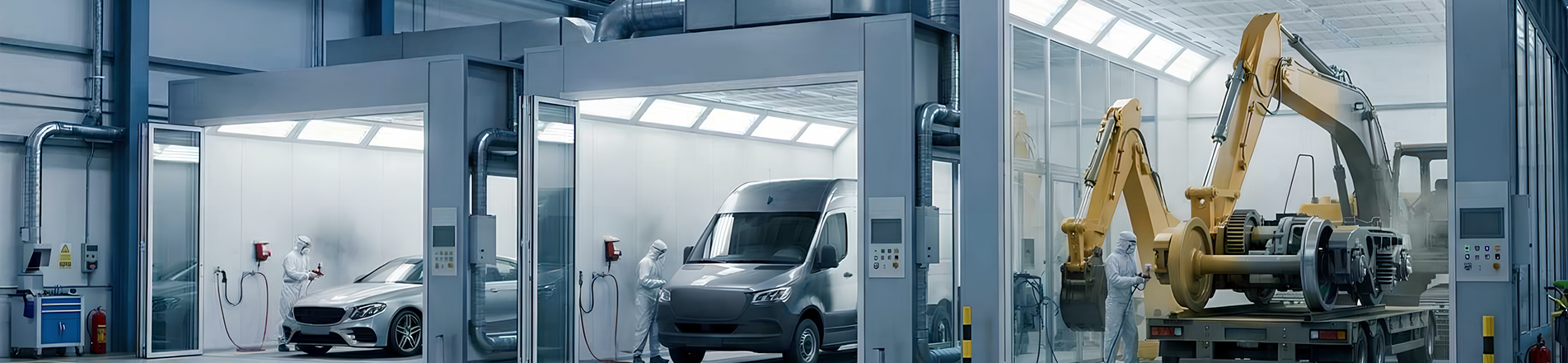
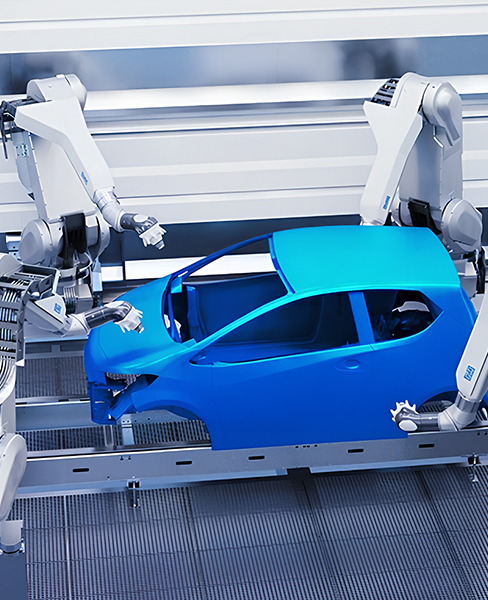
The heating system you choose for your spray booth has a direct impact on finish quality, cycle time and operating cost. Diesel, gas and electric systems can all deliver professional results when they are correctly designed and matched to the job, but each comes with its own trade‑offs in terms of stability, efficiency and economics.
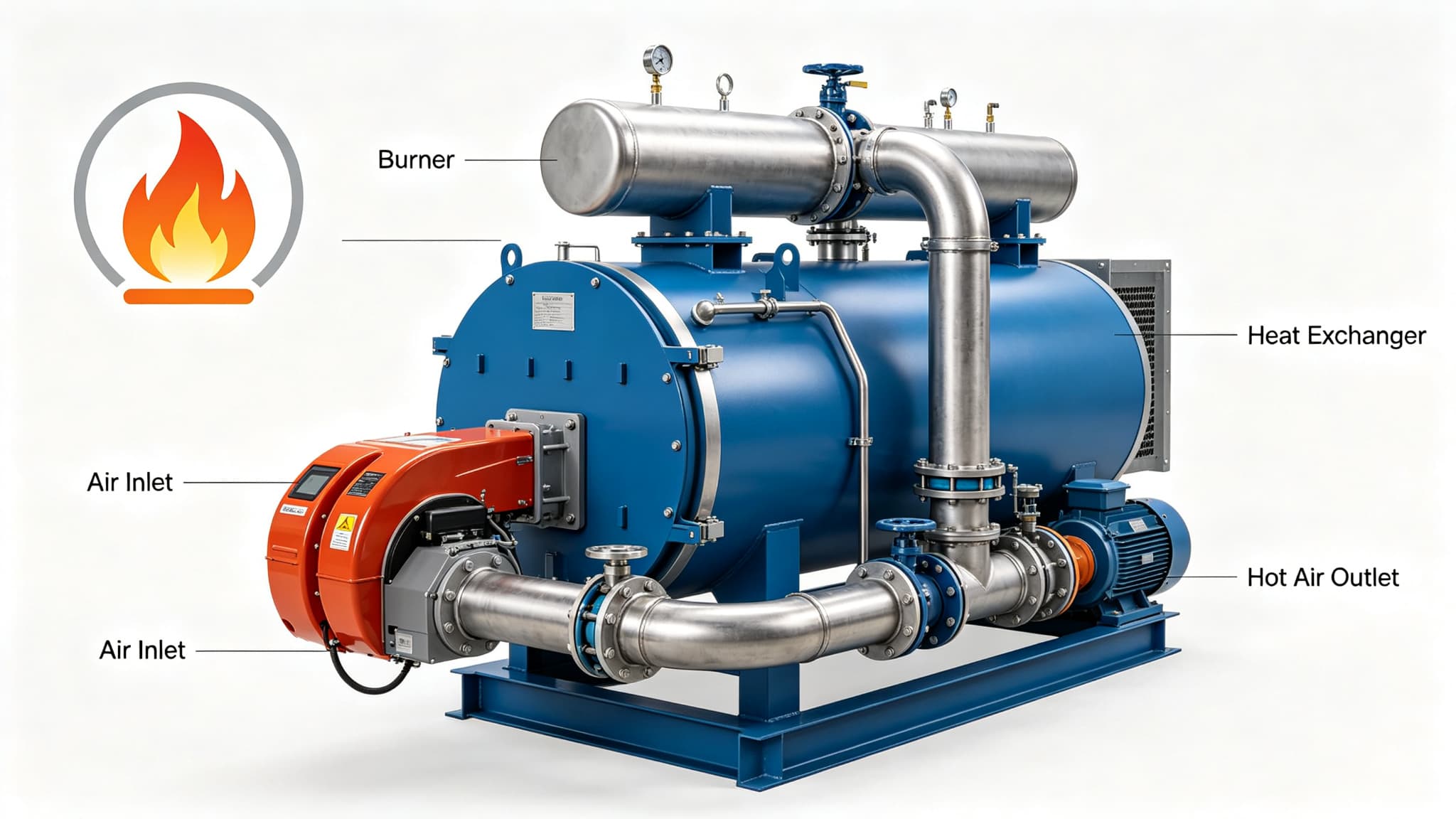
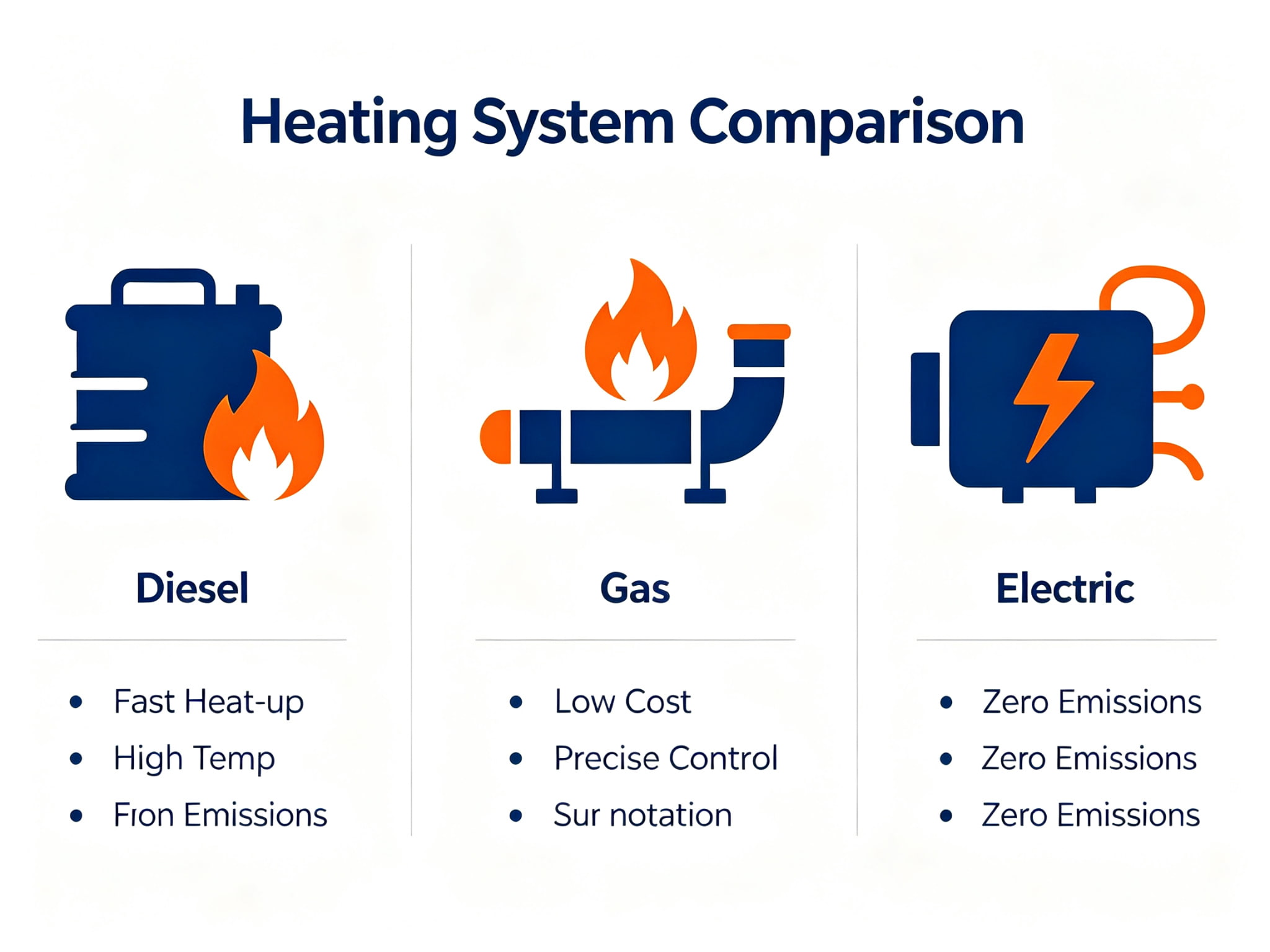
Fuel‑fired systems — typically diesel or natural gas — use a burner and heat exchanger to warm the air before it is circulated inside the booth. This approach is well known for fast heat‑up, high maximum temperatures and relatively uniform convection heating, which is ideal for large booths and high‑volume operations. In many regions, diesel or gas can also be more cost‑effective than electricity on a per‑kilowatt‑hour basis, especially where industrial energy prices are high.
Electric systems, meanwhile, use heating elements or infrared technology to raise the temperature. They are attractive for smaller workshops because of lower installation complexity and the absence of on‑site fuel storage or flue gas management. Electric solutions often offer very precise temperature control and zero on‑site combustion emissions, which is valuable in locations with tight environmental rules or limited ventilation capacity.
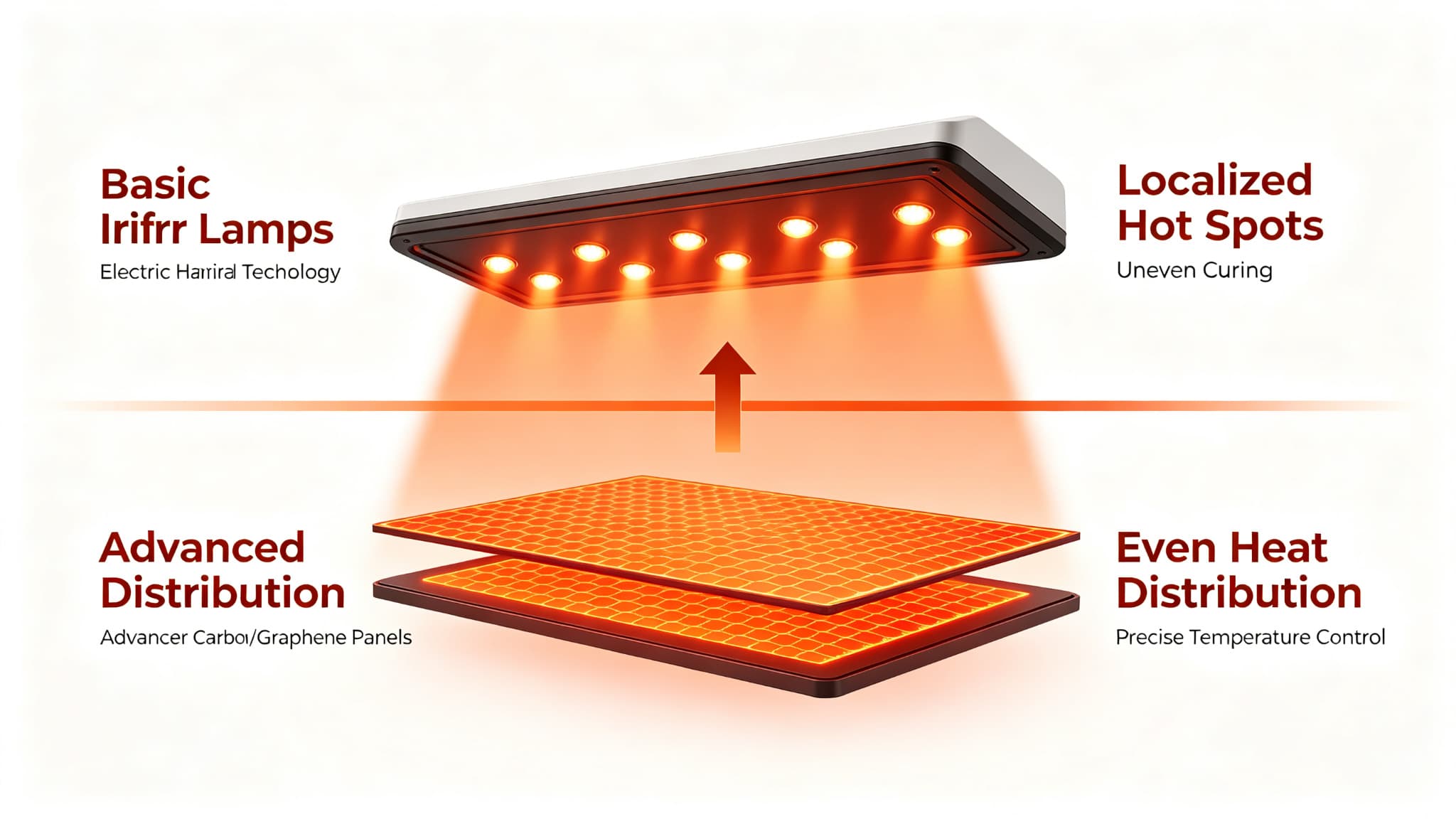
However, not all electric heating is equal. Basic infrared lamp setups may produce very localized hot spots and leave other areas relatively cool, which can create uneven curing and, in the worst cases, increased fire risk if the lamps are too close to painted surfaces. More advanced technologies such as carbon‑based or graphene panels distribute heat more evenly but still need to be evaluated against local electricity tariffs and throughput.
In practice, the smartest way to choose is to start from your energy prices and workload. A small shop in a region with cheap electricity may benefit from a well‑designed electric solution, while a large industrial user in a high‑electricity‑cost region will almost always lean towards diesel or gas. The right answer is not ideological — it is economic and operational.

 English
 Français
 Español
 عربي
عربي