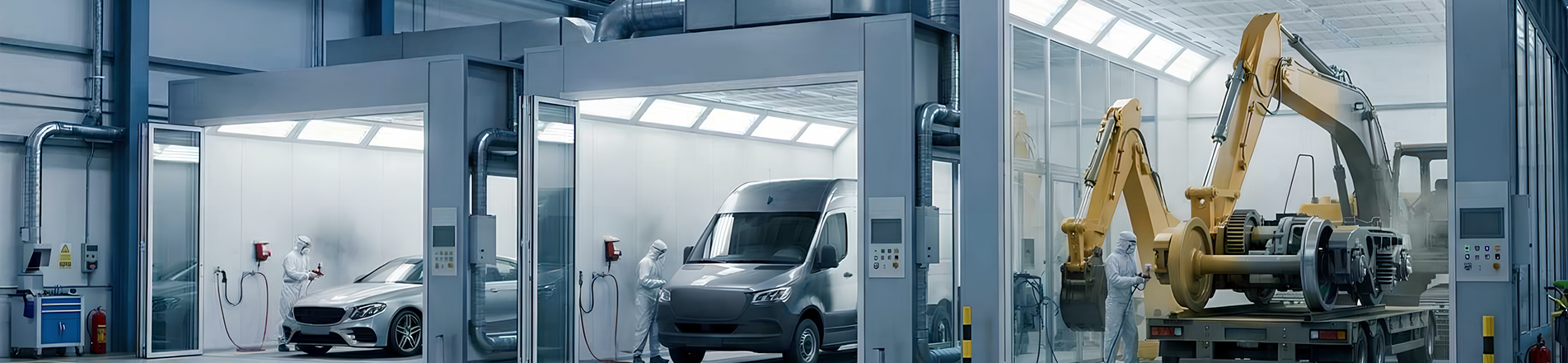
Many workshops want a perfectly flat entry into the spray booth but cannot or do not want to dig a pit in the concrete. This may be because of rental constraints, structural limitations, or simply to avoid long and expensive civil works. Fortunately, there are technical solutions that preserve good airflow and finishing quality without a traditional downdraft pit.
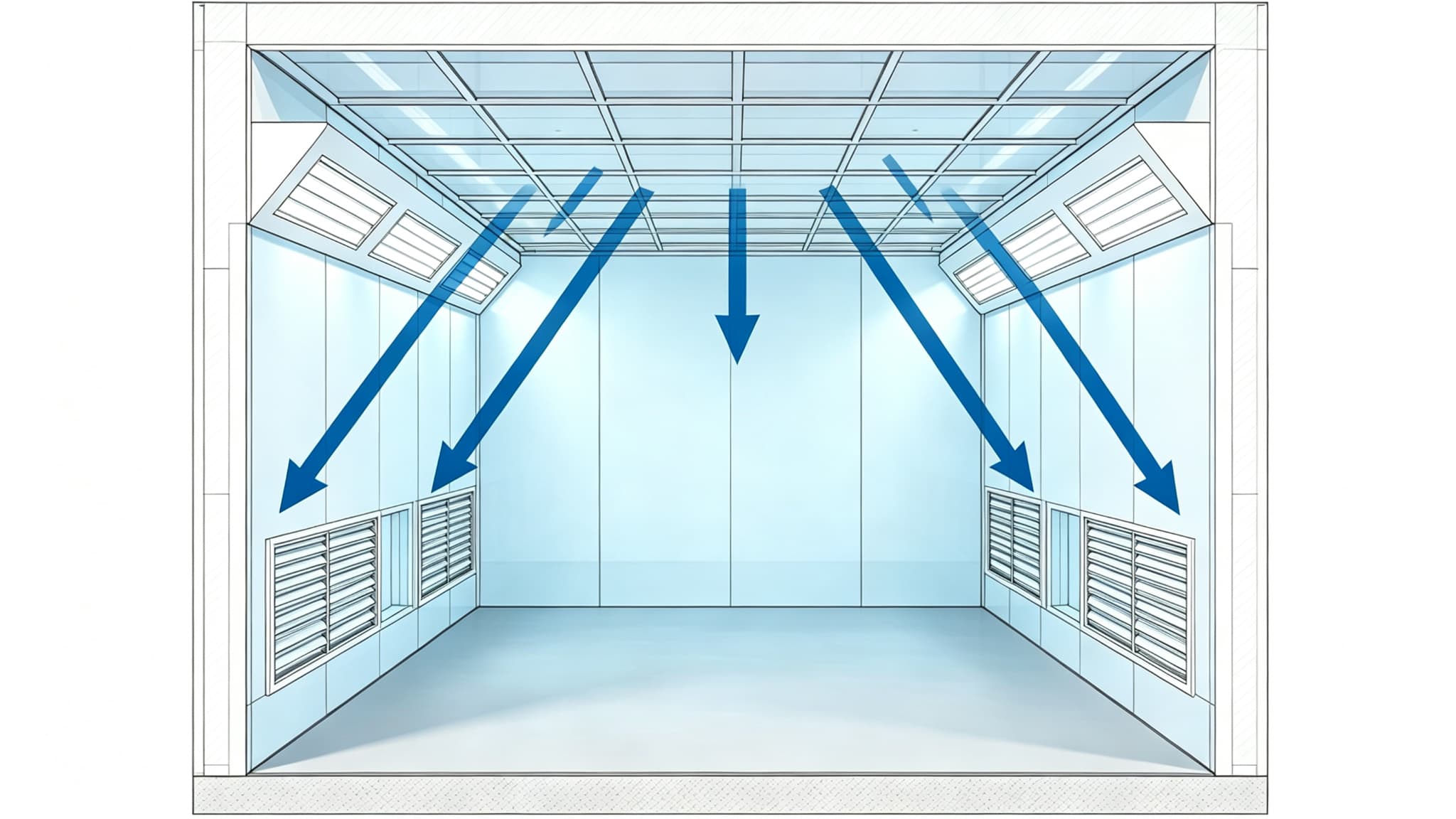
Two main booth architectures are particularly relevant here: side down-draft and semi-downdraft with rear extraction. In both concepts, fresh air is introduced through the ceiling, but extraction is moved away from the center of the floor. In a side down-draft booth, exhaust is located along the side walls; in a semi-downdraft booth, extraction is usually placed at the rear wall of the cabin.
The rear‑extraction concept is often chosen when very clean finishes are required. The air moves in a laminar way from the ceiling towards the rear, helping to keep overspray and dust away from the freshly painted surface. This configuration is common in automotive refinishing, high‑end electronics and even aerospace applications, where surface quality is critical.
Side down‑draft configurations are a strong fit for engineering machinery, heavy equipment and steel structures. Here, the priority is to maintain a robust airflow that quickly removes overspray from larger, complex shapes. By using side extraction, you keep the floor flat while still controlling the direction and speed of air across the workpiece.
The key point is that “no pit” does not have to mean “poor airflow”. With a properly engineered air path and correctly sized extraction surfaces, you can maintain effective capture of overspray and a safe working environment, even on a flat floor.

 English
 Français
 Español
 عربي
عربي